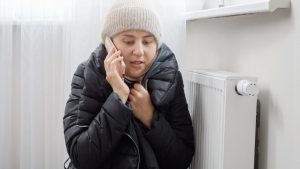
An HVAC emergency is any heating or cooling problem that puts your safety at risk, causes property damage, or leaves your home dangerously hot or cold. Gas odors, burning smells, a system that quits completely, major water leaks, and loud mechanical noises all qualify. If you notice one of these, shut the system down and call a licensed technician right away.
Most HVAC failures warn you first. A rattle you ignore in June becomes a dead blower motor in July, usually on the hottest afternoon of the year. Springfield summers push equipment hard, and our winters can swing from mild to below freezing in a matter of days, so systems here rarely fail quietly. Here are the five problems Springfield homeowners should never wait on, and what to do the moment you spot one.
Need help right now? White Plumbing Company runs 24/7 HVAC service across Springfield, Nixa, Ozark, and Republic. Call (417) 671-3005 or book online, and we will get a licensed technician headed your way.
1. Your HVAC System Stops Working Completely
A complete shutdown is the clearest sign your HVAC needs emergency service. Start with the two things you can check safely. Make sure the thermostat has power and is set to the right mode, then look in your electrical panel for a tripped breaker.
If the breaker trips again after you reset it once, stop there. Repeated tripping means the system is pulling more current than it should, and resetting it over and over can damage equipment or start a fire. That is a call, not a DIY fix.
A dead system stops being an inconvenience fast in July or January. Extreme indoor temperatures are a real health risk for older adults, infants, young children, and anyone with a heart or breathing condition, so treat a total failure during a heat wave or a hard freeze as urgent.
If you’re experiencing heating problems, our guide explains what to do when your furnace is not blowing hot air and when it’s time to call a professional.
2. You Smell Gas, Burning, or Another Unusual Odor
Never ignore an unfamiliar smell coming from your HVAC system. Odor is usually the first warning before a failure becomes dangerous.
Rotten eggs or sulfur near your furnace or water heater usually means a natural gas leak. A hot, sharp, electrical smell points to an overheating motor, scorched wiring, or a failing capacitor. Both need attention right away, and each one calls for a different first move.
If you smell gas, get everyone out of the house first, then call your gas utility or 911 from outside. Do not flip light switches, unplug anything, or use your phone indoors on the way out. If a carbon monoxide alarm sounds, treat it the same way and get to fresh air before you call.
For a burning or electrical smell, shut the system off at the thermostat and at the breaker, then call for service. Running a system through an electrical fault turns a small repair into a replacement. One exception worth knowing: a brief dusty smell the first time you run the furnace each fall is normal, and it should clear within an hour. If it lingers past that, treat it as an emergency.
3. Your HVAC System Is Making Loud or Unusual Noises
Every HVAC system makes some noise. What matters is a new sound, a louder sound, or a sound that shows up at a different point in the cycle than it used to.
Here is what the common sounds usually mean, and how quickly each one needs attention:
| Sound | What it usually means | How urgent |
| Grinding or scraping | Worn blower bearings, or a loose part striking the fan. Shut it off and call today. | Call today |
| Banging or clanking | A broken or disconnected component inside the unit. Shut it off and call today. | Call today |
| Squealing or screeching | A slipping belt, a failing motor bearing, or high internal pressure. | Call within a day or two |
| Repeated rattling | A loose panel, debris in the outdoor unit, or hardware backing out. | Get it looked at this week |
| Hissing | A refrigerant leak, or a duct leak under pressure. | Call today |
A booming or whooshing sound when the furnace fires up deserves its own mention, because it usually means gas is pooling before it ignites. Shut the furnace off and call. As a rule, any sound loud enough to hear from another room is worth a call, and the cheapest repair is almost always the one you make before the part fails completely.
4. Your AC Runs but Stops Cooling
When the air from your vents turns warm in the middle of a Springfield August, run three quick checks before you call. Set the thermostat to cool and drop it five degrees below room temperature. Pull the air filter and hold it up to a light, because a filter packed with dust can choke airflow enough to freeze the coil. Then step outside and confirm the condenser fan is spinning.
If all three check out and the air is still warm, the cause is usually low refrigerant, a frozen evaporator coil, or a failed compressor. Those need a technician. We go deeper on this in our guide to an AC that is not blowing cold air, and in our breakdown of when warm air means you need emergency AC repair.
5. You Find Water or Refrigerant Leaking
Moisture around your indoor unit is never normal for long, and it is one of the fastest ways a small HVAC problem turns into a drywall and flooring problem.
Your air conditioner does produce condensation while it runs, and that water should drain away through the condensate line. When it pools instead, the line is usually clogged with algae or the drain pan has rusted through. Shut the system down, slide a shallow pan under the drip, and get it looked at before the water reaches subfloor or ductwork.
Refrigerant leaks are a different problem. Watch for ice on the copper lines, a hissing sound near the indoor coil, and cooling that gets a little worse every week. Refrigerant is federally regulated, and EPA rules require certified technicians to service equipment that contains it. Topping off a leaking system without repairing the leak is money spent twice.
When Should You Call for Emergency HVAC Repair in Springfield, MO?
Call for emergency HVAC repair the moment a problem involves safety, active damage, or a home that is no longer livable. That means gas odors, burning smells, a carbon monoxide alarm, a system that will not run in extreme heat or cold, water spreading across a floor, or a loud mechanical failure. Everything else can usually wait until morning.
Being honest about the other side of this matters just as much. One room that runs a few degrees warm, a dirty filter you can change yourself, a thermostat that needs batteries, or a tune up you skipped last spring are all worth fixing, and none of them are worth after-hours rates. Call, describe what you are seeing, and a good technician will tell you straight whether it can wait. We would rather say it can wait than sell you an emergency you do not have.
How to Avoid Most HVAC Emergencies
Most of the emergency calls we run in Springfield trace back to something a seasonal tune up would have caught. A short routine prevents the majority of them:
- Change your air filter every one to three months, and monthly if you have pets
- Book a cooling tune up in spring and a heating tune up in fall
- Keep two feet of clear space around the outdoor condenser
- Pour a cup of distilled vinegar down the condensate line each season so algae cannot clog it
- Test your carbon monoxide alarms twice a year, and replace them on the schedule printed on the unit
- Pay attention at the first startup of each season, because that is when problems show up
Springfield homes deal with hard water, heavy summer humidity, and freeze-and-thaw swings in the same year. That combination is harder on heating and cooling equipment than a milder climate would be, so twice-yearly service is not overkill here.

Do Not Wait on a Serious HVAC Problem in Springfield
Small HVAC symptoms rarely stay small. A new sound, an unfamiliar smell, weak cooling, or a system that quits all point to something that needs a trained set of eyes before it takes the rest of the system with it.
White Plumbing Company has served Springfield homeowners since 1989, and our licensed technicians handle emergency HVAC repair around the clock in Springfield, Nixa, Ozark, Republic, Brookline Township, and the rest of Greene and Christian County. Call (417) 671-3005, text (417) 804-3553, or book your service online, and we will tell you honestly what needs doing tonight and what can wait until morning.
HVAC Emergency Questions Springfield Homeowners Ask
What is considered an HVAC emergency?
Gas smells, burning or electrical odors, a complete shutdown, a large water leak, a new grinding or banging noise, or a sudden loss of heating or cooling. Any one of those means calling a professional right away instead of waiting for the next business day.
How do I know my HVAC needs emergency service?
If your system shuts off suddenly, you smell gas, you notice a burning odor or electrical trouble, you hear loud grinding or banging, you spot a major leak, or your system can’t keep your home safe and comfortable, that’s an emergency.
What should I do if my AC quits in Springfield, MO?
First, check your thermostat, make sure it has power, and check the air filter. If everything looks fine, but your AC still won’t work, or you hear odd noises or smell something strange, shut it down and contact a qualified HVAC technician.
How soon should I get emergency HVAC help?
Don’t wait if you have a safety issue, your system completely fails, you smell gas, something’s burning, there’s a serious leak, or your home is way too hot or cold. Call for help right away before things get worse.
How much does emergency HVAC service cost in Springfield, MO?
After hours and weekend rates run higher than a scheduled appointment because a technician is dispatched outside normal service hours. Ask any company for the diagnostic fee before anyone drives out, and ask whether it applies to the repair. The higher cost is usually what happens if you wait. A failing capacitor is an inexpensive part. The compressor it can take out is not.
Can I keep running my HVAC system until the technician arrives?
No, not if you smell gas, smell burning, hear grinding or banging, or find water pooling. Shut the system off at the thermostat and at the breaker. Running a system through a mechanical or electrical failure can turn a repair into a replacement.