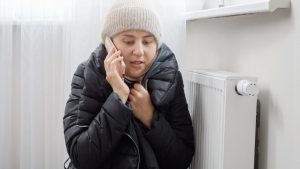
A furnace tune-up is an annual inspection, cleaning, and safety check of your heating system. A technician tests the burners, heat exchanger, blower, gas connections, and safety controls, cleans what needs cleaning, and tells you what is wearing out. Most take about an hour.
In Springfield, the right time to book one is early fall, before the first hard freeze and before every HVAC schedule in town fills up. Here is what gets checked, what drives the price, and how to tell if yours is overdue.
Want it on the calendar before the cold hits? Call us at (417) 671-3005, text (417) 804-3553, or book your furnace tune-up online in under two minutes.
What Does a Furnace Tune-Up Include?
A proper tune-up is a safety inspection and a performance check, not a filter change with a receipt. Here is what our technicians work through on a gas furnace:
- Inspect the heat exchanger for cracks, rust, and separation
- Clean the burners and the flame sensor, then check the flame pattern
- Test the igniter or pilot assembly through a full start cycle
- Check gas pressure and inspect every gas connection
- Tighten electrical connections and measure voltage and current on the blower motor
- Clean and adjust blower components so airflow lands where it should
- Inspect the flue and venting for blockages and proper draft
- Check the condensate drain on high-efficiency units
- Replace or inspect the air filter
- Verify thermostat settings and watch the system start, run, and shut off
- Test the safety controls, including the limit switch and the flame rollout switch
ENERGY STAR publishes a similar checklist for heating and cooling equipment, and notes that airflow problems alone can reduce a system’s efficiency by up to 15 percent.
Why Does a Furnace Tune Up Matter More in Springfield?
Your furnace sits unused from about April to October, then gets asked to run hard the first night the temperature drops. Dust settles on the burners and the flame sensor all summer. Insects and rodents find their way into flues and cabinets. None of it shows up until you need heat.
Ozarks winters add a specific problem. Our freeze-and-thaw swings make the furnace cycle on and off far more than it would in a steadier climate, and every cycle is another start on parts that are already worn.
There is a safety reason too. The Consumer Product Safety Commission urges homeowners to schedule a yearly professional inspection of every fuel-burning appliance in the house, furnaces included, because cracked heat exchangers and blocked flues are how carbon monoxide reaches living space.
How Much Does a Furnace Tune Up Cost?
Tune-up pricing depends on the system type, how easy it is to access, and whether the visit turns into a repair. A standard gas furnace on an accessible unit sits at the low end. A high-efficiency unit, a tight attic or crawl space install, or a second system in the same house costs more.
What we will not do is quote you one number and hand you another. You get the price before we start, and we price anything we find that needs repair separately so the decision stays yours.
When Should You Schedule a Furnace Tune-Up?
Once a year, in the fall, before you need the heat. ENERGY STAR recommends a pre-season checkup for exactly this reason. Contractors get busy the week the weather turns, and a tune-up booked in late September is a service call, while the same problem found in January is an emergency.
Book sooner than that if any of these apply:
- You just bought the home and have no service record for the furnace
- The system is more than 10 years old
- It has been over a year since the last professional visit
- You had heating trouble last winter that never got looked at
What Are the Signs Your Furnace Is Overdue?
You do not have to wait for a breakdown. These are what we hear most from Springfield homeowners whose systems have gone too long between visits:
- Gas bills climbing with no change in how you use the heat
- Rooms that never quite match, usually the far end of the house
- The furnace turning on and off every few minutes instead of running a full cycle
- Rattling, squealing, or a boom when the burners light
- A burner flame burning yellow instead of blue
- A burning or musty smell that lasts past the first startup of the season
- A carbon monoxide alarm that has gone off even once
If more than one of these sounds familiar, book a repair visit rather than a tune-up, and tell us what you are noticing when you call.

What Can You Handle Yourself, and What Needs a Technician?
| Can be handled at home | Leave these to a technician |
|---|---|
| Checking the filter monthly and changing it when it looks dirty | Anything involving the gas valve, gas pressure, or gas connections |
| Keeping supply vents open and return grilles clear | Opening the burner compartment or cleaning the flame sensor |
| Clearing stored boxes away from the furnace | Inspecting the heat exchanger for cracks |
| Testing carbon monoxide alarms and changing their batteries | Electrical testing on the blower motor or control board |
| Noting what the system is doing wrong before you call | Adjusting or replacing safety controls |
Nothing in the left column replaces the annual visit, but doing it well makes the visit shorter and the system last longer.
Is a Furnace Tune Up Worth It?
For a system in decent shape, yes, and the honest reason is not efficiency. Most furnace failures give warning first, and a tune-up is when someone who knows what to look for is standing in front of the unit. A flame sensor cleaned in October costs a fraction of a no-heat call on a Sunday in January.
Two things worth checking in your own paperwork. Many manufacturers require proof of annual professional maintenance for a warranty claim, and some home insurance policies ask about maintenance records after a heating-related claim. Both are worth a look before you decide to skip a year.
If your furnace is past 15 years old and needs work every season, we will tell you a tune-up is not the right spend and walk you through replacement instead.
Frequently Asked Questions
How often should you tune up your furnace?
Once a year, ideally in early fall before the heating season starts. If you have a heat pump that runs year-round, twice a year is the standard.
How long does a furnace tune-up take?
About an hour for a single gas furnace in an accessible spot. Add time for a second system, a high-efficiency unit, or a furnace that has not been serviced in several years.
Is a furnace tune-up the same as a filter change?
No. The filter is one small item on the list. A tune-up is a safety inspection and a performance check covering the heat exchanger, burners, gas connections, electrical components, venting, and safety controls.
Do I need a tune-up if my furnace is new?
Yes. New systems still need the annual visit, and many manufacturers require it to keep the warranty valid. Check your paperwork.
What happens if I skip it?
Nothing, until something fails. The risk is not that the furnace quits. It is that it quits on the coldest night of the year, and that a cracked heat exchanger goes unnoticed in the meantime.
Book Your Furnace Tune-Up in Springfield, MO
Get it done before the first hard freeze. Call us at (417) 671-3005, text (417) 804-3553, or schedule online. We have kept Springfield homes warm since 1989, and we will tell you honestly what your system needs and what it does not.